The Live Editor in this version includes new interactive controls and tasks, allowing engineers to build dynamic dashboards without writing complex UI code. Toolbox Expansion
The documentation—the "docum" in our keyword—truly is "better" in this release. From dark theme compatibility to panel navigation and exportable formats, MathWorks has made it easier than ever to find answers, understand functions, and share knowledge. Whether you are a student learning the basics of matrix manipulation or a veteran engineer designing next-generation 5G communication systems, R2023b delivers a polished, powerful, and well-documented platform for technical computing.
: You can now insert tables containing both text and images directly into live scripts to better document your results.
Improved integration of documentation within the Live Editor, providing faster access to syntax, usage, and examples for specialized functions.
With the ability to export live scripts to Markdown and Jupyter notebooks, users can now convert their documented analyses into formats that integrate with external documentation systems like GitHub Wikis, ReadTheDocs, or Confluence.
The "better" documentation is most visible in the Live Editor. R2023b added (e.g., buildPartialDependence , cleanMissingData ). The documentation for these tasks no longer just shows syntax; it now includes embedded playable examples . You can modify parameters inside the doc window and see the output update in real-time without copying code to the command line.
If you maintain an active internet connection, set your preferences to use the web-based documentation. MathWorks frequently updates web documentation with community clarifications, bug report links, and additional edge-case examples that might not be present in the static local installation files.
Transition your older standard script files (.m) into Live Scripts. This allows you to integrate formatted text, equations, and interactive plots, mirroring the clean presentation style found in the R2023b documentation.
The MATLAB documentation is extensive and covers all toolboxes and functions. For MATLAB R2023b, you can expect comprehensive guides, release notes, and a detailed documentation set. Users can access:
Function reference pages (e.g., plot , fft , ode45 ) now have:
Finding exact syntax examples quickly eliminates guesswork.
Sharing your work with the broader scientific community is now seamless. You can export Live Scripts and functions directly to or Jupyter notebooks . This bridge between MATLAB and other popular data science formats makes cross-platform collaboration easier than ever. 4. Low-Code AI & Experiment Management
R2023b - Updates to the MATLAB and Simulink product families
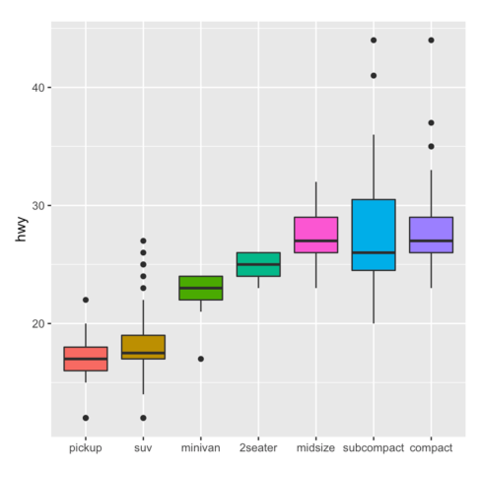
geom
ggplot2 builds charts through layers using
geom_ functions. Here is a list of the different
available geoms. Click one to see an example using it.
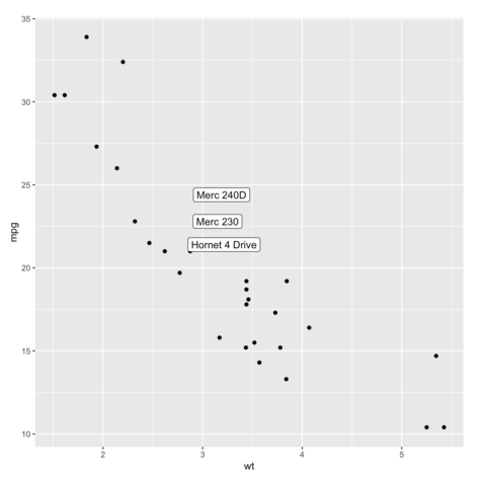
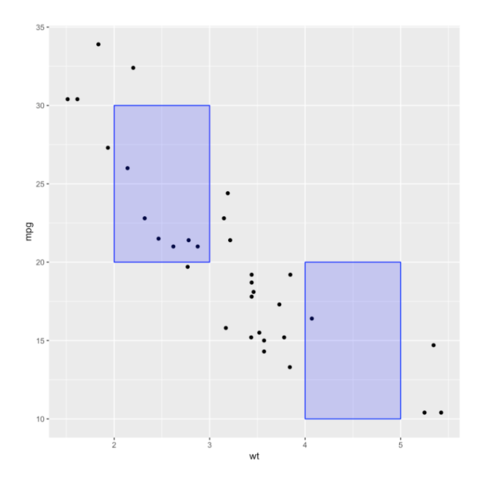
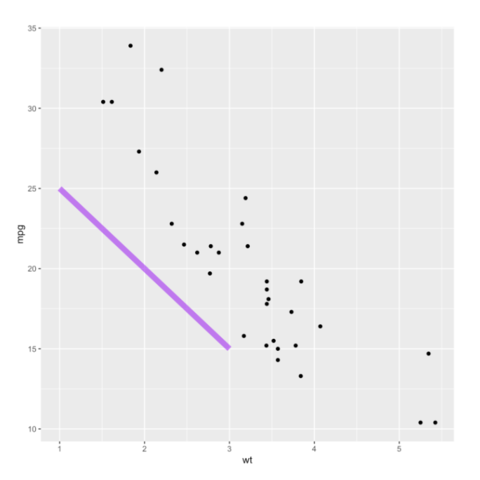
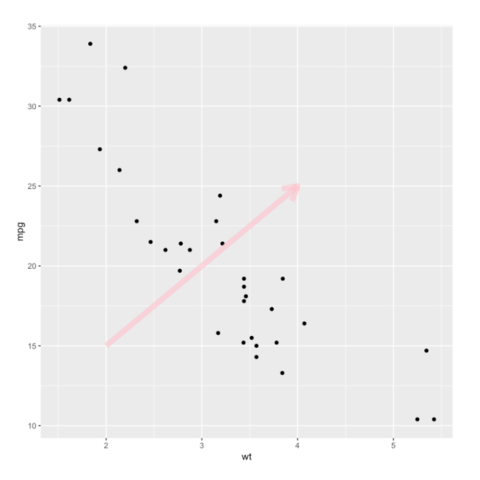
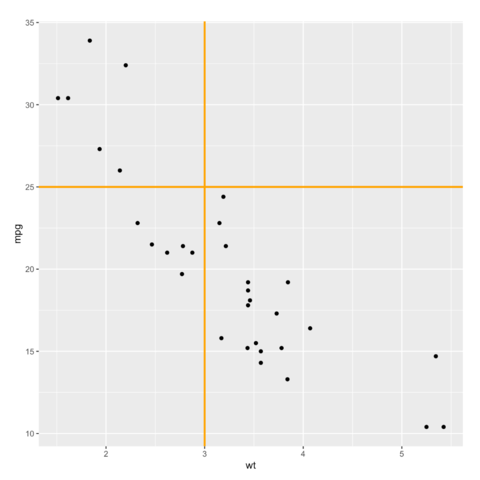
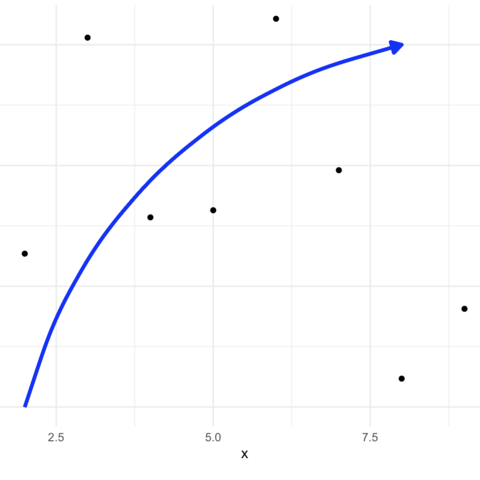
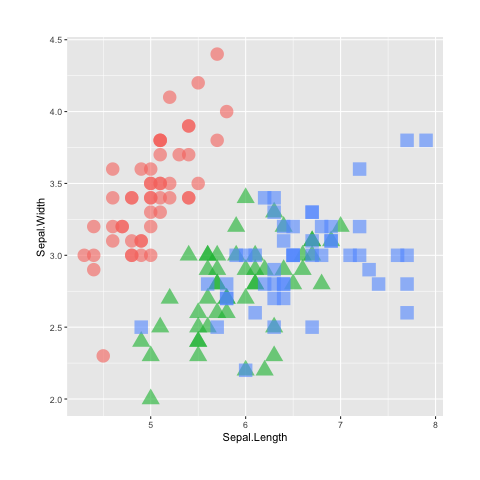
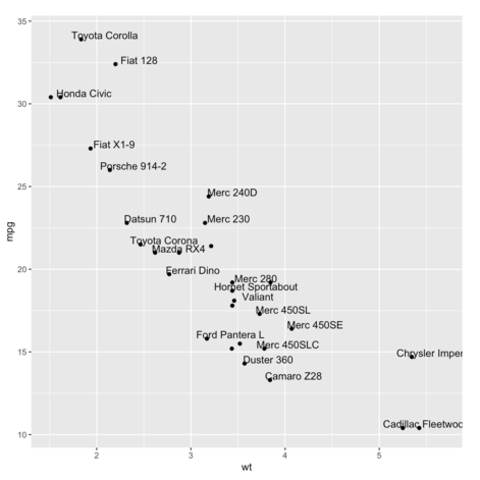
Annotation is a
key step
in data visualization. It allows to highlight the main message of the
chart, turning a messy figure in an insightful medium.
ggplot2 offers many function for this purpose, allowing
to add all sorts of text and shapes.
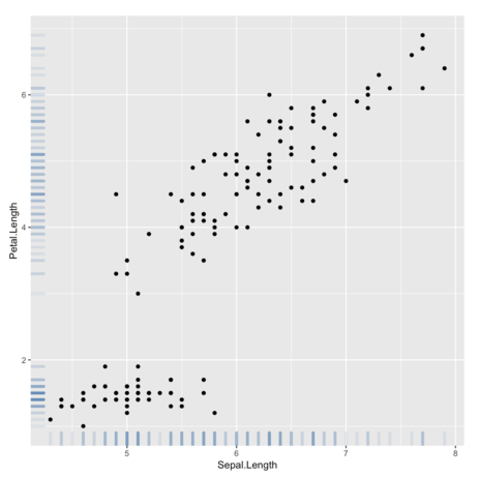
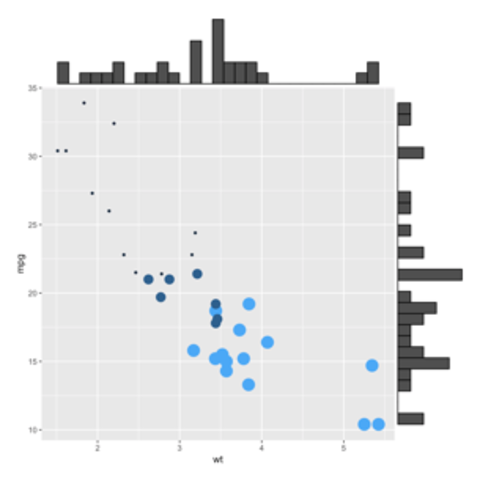
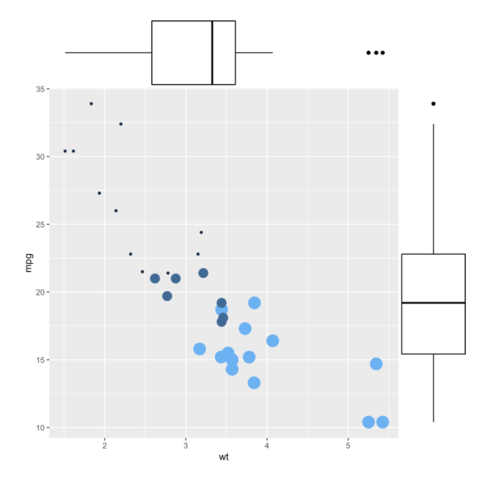
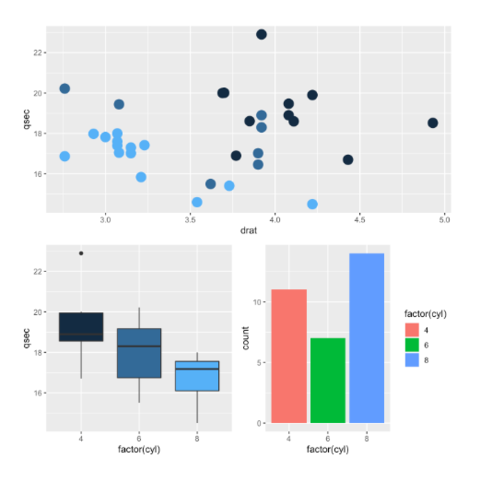
Marginal plots are not natively supported by ggplot2, but
their realisation is straightforward thanks to the
ggExtra library as illustrated in
graph #277.
ggplot2 chart appearance
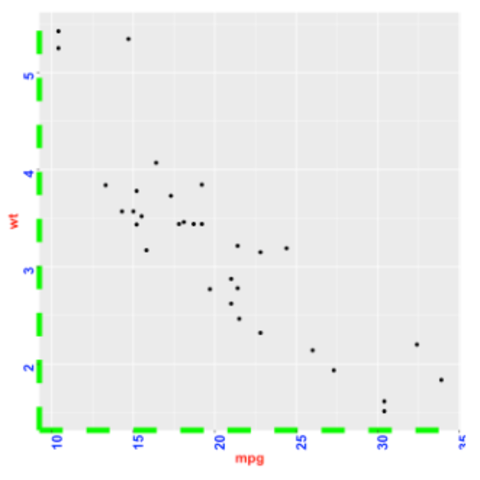
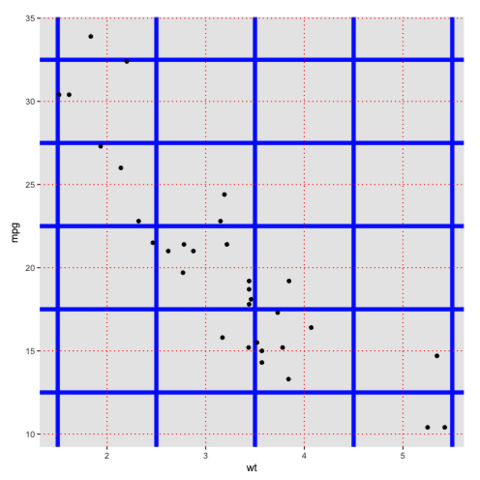
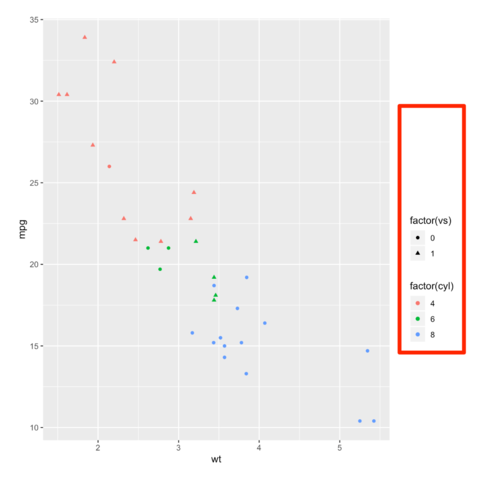
The theme() function of ggplot2 allows to
customize the chart appearance. It controls 3 main types of
components:
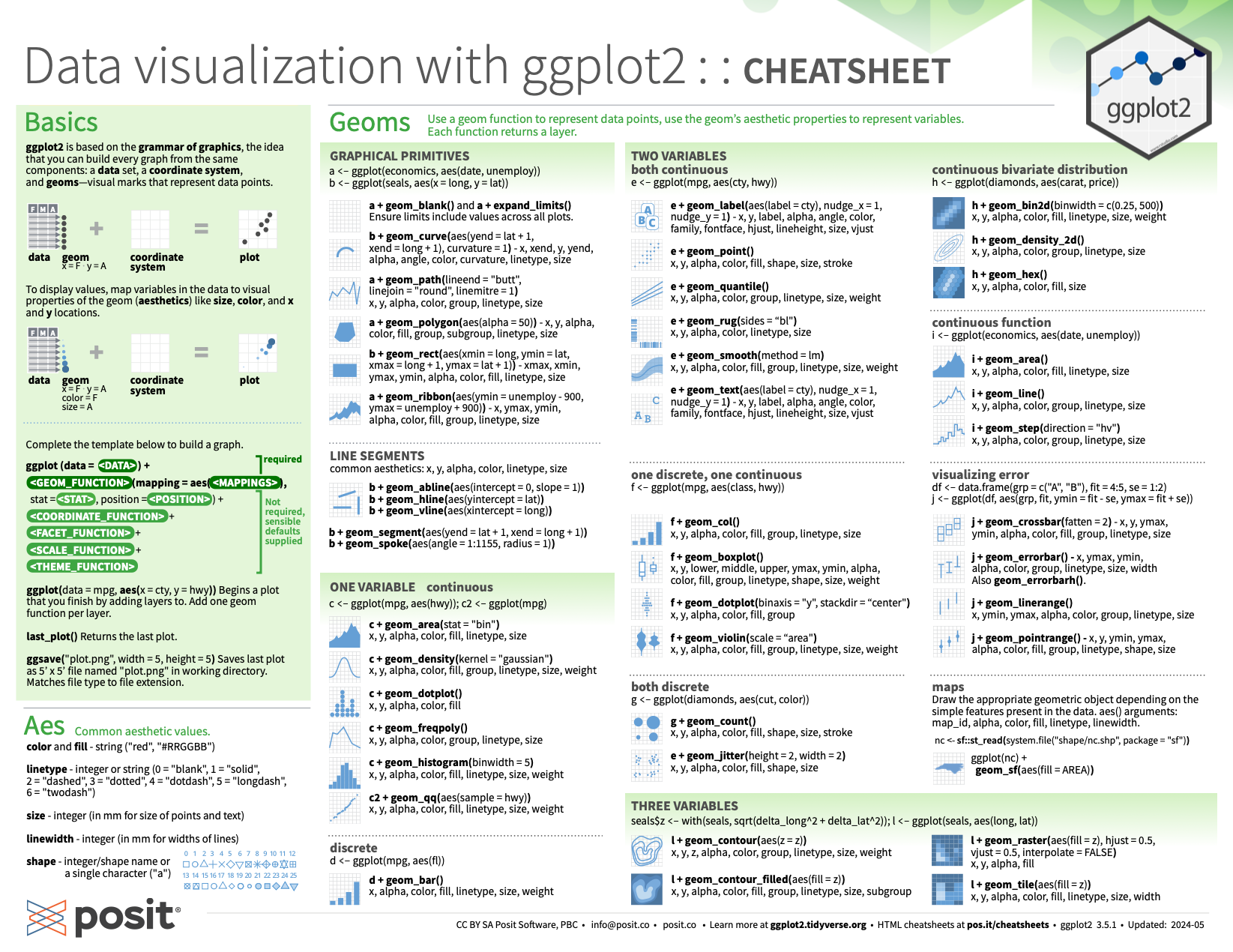
Here’s the official ggplot2 cheatsheet created by Posit. It covers all the key concepts of the library.
I've also compiled it with the most useful R and data visualization cheatsheets into a single PDF you can download:
ggplot2
A cheatsheet for quickly recalling the key functions and arguments of the ggplot2 library.
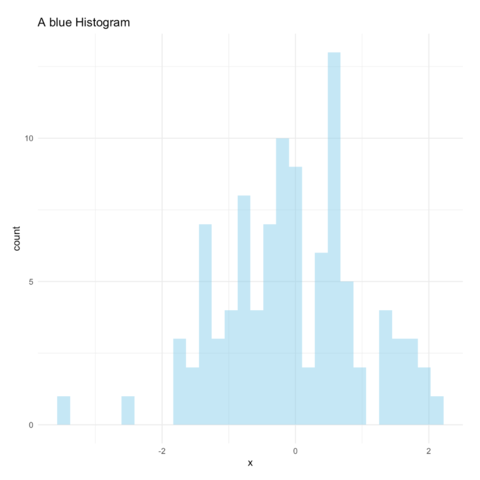
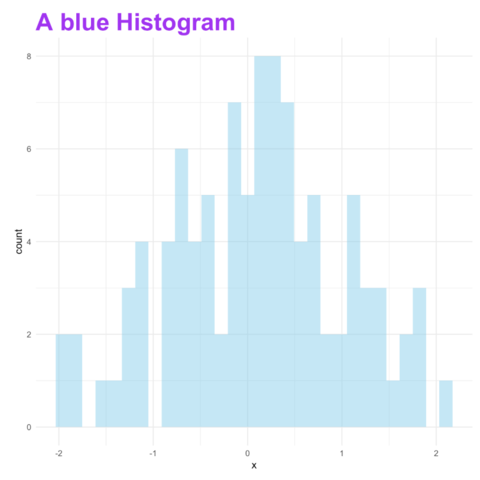
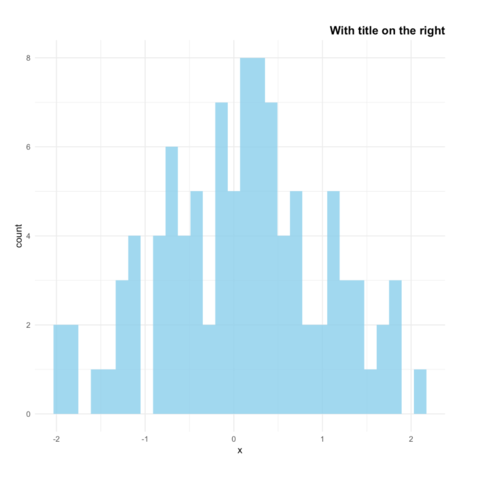
ggplot2 title
The ggtitle() function allows to add a title to the
chart. The following post will guide you through its usage, showing
how to control title main features: position, font, color, text and
more.
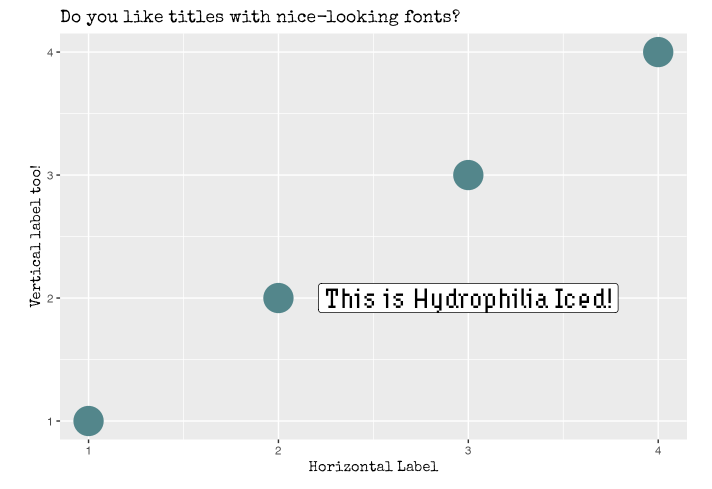
ggplot2
If you don't want your plot to look like any others, you'll definitely
be interested in using custom fonts for your title and labels! This is
totally possible thanks to 2 main packages: ragg and
showtext. The
blog-post below
should help you using any font in minutes.
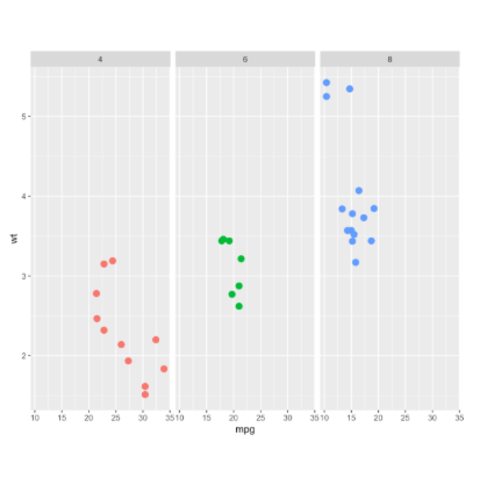
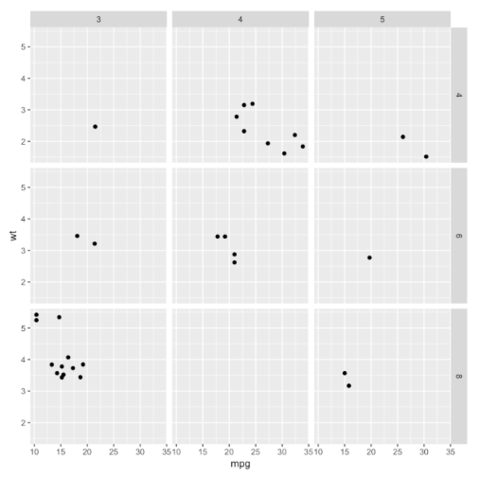
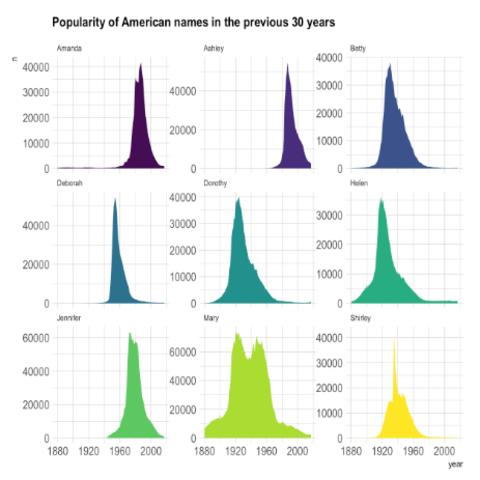
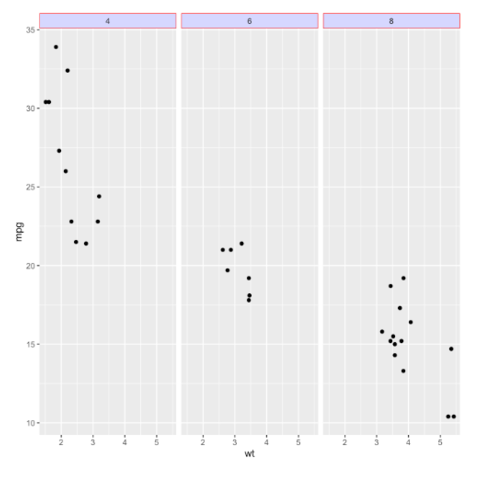
facet_wrap() and
facet_grid()
Small multiples is a very powerful dataviz technique. It split the
chart window in many small similar charts: each represents a specific
group of a categorical variable. The following post describes the main
use cases using facet_wrap() and
facet_grid() and should get you started quickly.
It is possible to customize any part of a ggplot2 chart
thanks to the theme() function. Fortunately, heaps of
pre-built themes are available, allowing to get a good style with one
more line of code only. Here is a glimpse of the available themes.
See code
The Live Editor in this version includes new interactive controls and tasks, allowing engineers to build dynamic dashboards without writing complex UI code. Toolbox Expansion
The documentation—the "docum" in our keyword—truly is "better" in this release. From dark theme compatibility to panel navigation and exportable formats, MathWorks has made it easier than ever to find answers, understand functions, and share knowledge. Whether you are a student learning the basics of matrix manipulation or a veteran engineer designing next-generation 5G communication systems, R2023b delivers a polished, powerful, and well-documented platform for technical computing.
: You can now insert tables containing both text and images directly into live scripts to better document your results.
Improved integration of documentation within the Live Editor, providing faster access to syntax, usage, and examples for specialized functions.
With the ability to export live scripts to Markdown and Jupyter notebooks, users can now convert their documented analyses into formats that integrate with external documentation systems like GitHub Wikis, ReadTheDocs, or Confluence.
The "better" documentation is most visible in the Live Editor. R2023b added (e.g., buildPartialDependence , cleanMissingData ). The documentation for these tasks no longer just shows syntax; it now includes embedded playable examples . You can modify parameters inside the doc window and see the output update in real-time without copying code to the command line.
If you maintain an active internet connection, set your preferences to use the web-based documentation. MathWorks frequently updates web documentation with community clarifications, bug report links, and additional edge-case examples that might not be present in the static local installation files.
Transition your older standard script files (.m) into Live Scripts. This allows you to integrate formatted text, equations, and interactive plots, mirroring the clean presentation style found in the R2023b documentation.
The MATLAB documentation is extensive and covers all toolboxes and functions. For MATLAB R2023b, you can expect comprehensive guides, release notes, and a detailed documentation set. Users can access:
Function reference pages (e.g., plot , fft , ode45 ) now have:
Finding exact syntax examples quickly eliminates guesswork.
Sharing your work with the broader scientific community is now seamless. You can export Live Scripts and functions directly to or Jupyter notebooks . This bridge between MATLAB and other popular data science formats makes cross-platform collaboration easier than ever. 4. Low-Code AI & Experiment Management
R2023b - Updates to the MATLAB and Simulink product families