
AmongLock Among Us Lock Screen
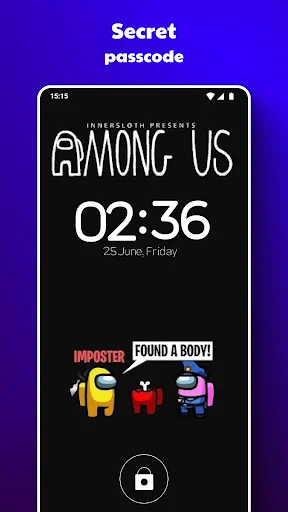
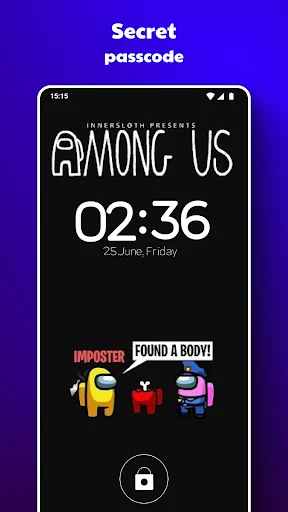
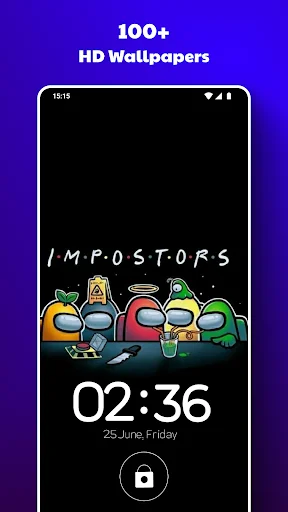
Show your love for Among Us every time you unlock your phone. Protect your privacy with custom lock screen wallpapers, fun animations, and security features that keep strangers out.
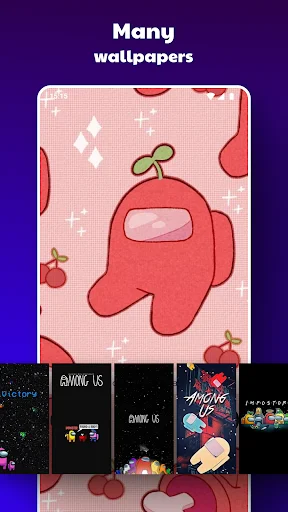
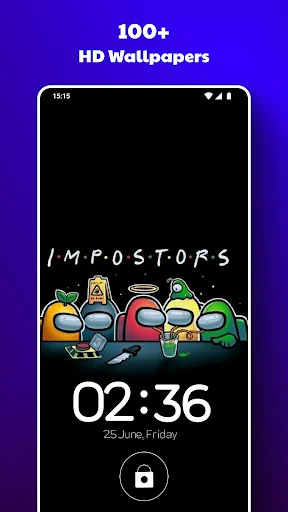
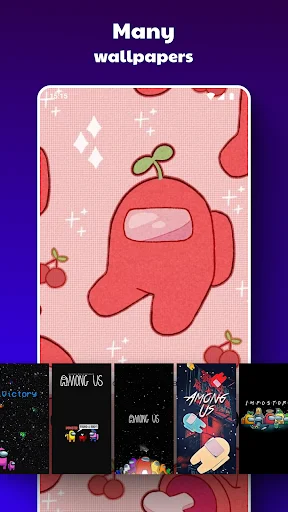
Choose from a huge collection of high-quality Among Us wallpapers and customize every detail. Change characters, animations, unlock text, and even the ejection music to create a lock screen that's uniquely yours.
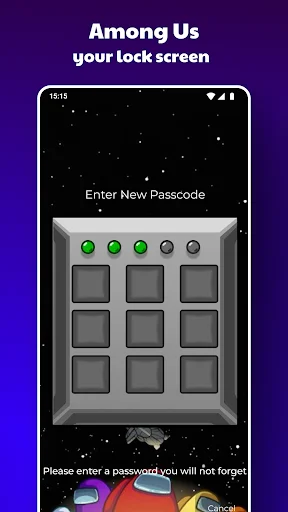
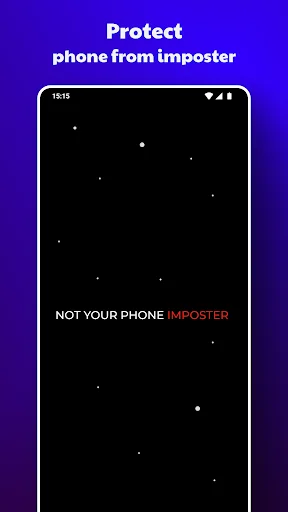
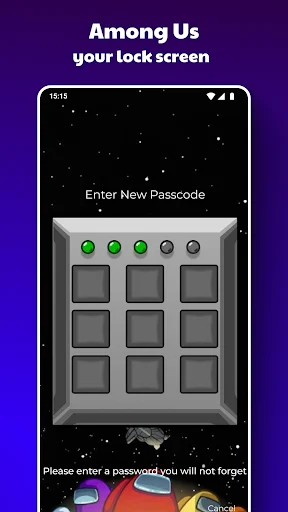
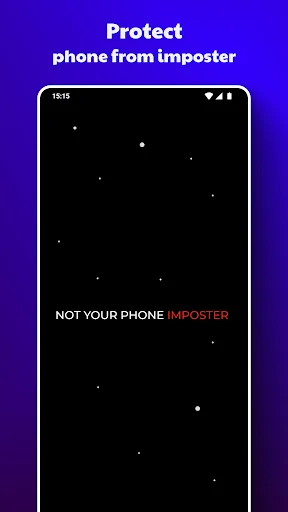
Stop friends, siblings, and strangers from accessing your phone without permission. Set your own password and security questions so only you can get in – while intruders get ejected by your Among Us crew.
No internet connection needed to use your custom lock screen. AmongLock works completely offline and uses optimized battery settings, so you can enjoy your themed screen without draining your phone.
Get your Among Us lock screen running in seconds. Just open the app, pick your favorite wallpaper, set your password, and preview your new look. It's compatible with all Android devices and easy enough for anyone to use.
Understanding Microsoft Toolkit 2.5.1: Features, Functionality, and Risks
Once a product is successfully activated, the license is typically maintained indefinitely without the need for periodic manual intervention.
Provides a safe, continually updated suite of Office apps coupled with OneDrive cloud storage via an affordable monthly or annual subscription.
As the day drew to a close, Alex reflected on the MS Toolkit 2.5.1 and how it had made his job easier. He realized that the tool was not just a utility, but a powerful ally in his work as an IT professional. He made a mental note to explore more features of the tool and to stay up-to-date with the latest developments. Microsoft Toolkit 2.5.1.
Microsoft Toolkit 2.5.1 is an all-in-one set of tools that manages, deploys, and activates Microsoft Office (versions 2003 through 2013) and Windows (Vista through Windows 8.1). Its primary utility lies in its ability to bypass standard licensing hurdles using technology. By creating a local KMS server or using specialized scripts, the toolkit tricks the software into believing it has been validated against an official Microsoft licensing server. Key features of version 2.5.1 include:
For developers and IT professionals, the search for "Microsoft Toolkits 2.5.1" may lead to official Microsoft resources that are invaluable for legitimate work. Always verify the source of your downloads and consider the legal implications before using any activation utility.
While it remains a frequent point of discussion across tech forums, using it presents substantial legal and cybersecurity implications. Below is a comprehensive guide to understanding what Microsoft Toolkit 2.5.1 is, how it functions under the hood, its architectural features, and the distinct safety risks associated with it. Core Mechanics: How It Works Understanding Microsoft Toolkit 2
To run Microsoft Toolkit, distribution sites instruct users to disable Windows Defender and any third-party antivirus programs. Disabling your system's core defenses to run an unknown executable file strips away your primary layer of security, leaving the operating system entirely vulnerable to immediate exploitation. 3. System Instability
: In large organizations, IT departments deploy a local Key Management Service (KMS) host. Instead of individual computers reaching out to Microsoft to activate, they check in with the company's internal KMS server. The licenses activated via this method are temporary and expire every 180 days , requiring the client computer to re-verify its status periodically with the server.
The 2.5.1 update introduced several technical refinements over its predecessors: He realized that the tool was not just
Microsoft Toolkit 2.5.1 exploits this structure by running a right on the local host machine. It fools the operating system’s internal activation files into treating 127.0.0.1 (localhost) as an authorized corporate licensing server. ⚠️ Security, Longevity, and Legality Concerns
: A tool to save and restore existing activation tokens, useful before a system reformat. EZ-Activator
Understanding Microsoft Toolkit 2.5.1: Features, Functionality, and Risks
Once a product is successfully activated, the license is typically maintained indefinitely without the need for periodic manual intervention.
Provides a safe, continually updated suite of Office apps coupled with OneDrive cloud storage via an affordable monthly or annual subscription.
As the day drew to a close, Alex reflected on the MS Toolkit 2.5.1 and how it had made his job easier. He realized that the tool was not just a utility, but a powerful ally in his work as an IT professional. He made a mental note to explore more features of the tool and to stay up-to-date with the latest developments.
Microsoft Toolkit 2.5.1 is an all-in-one set of tools that manages, deploys, and activates Microsoft Office (versions 2003 through 2013) and Windows (Vista through Windows 8.1). Its primary utility lies in its ability to bypass standard licensing hurdles using technology. By creating a local KMS server or using specialized scripts, the toolkit tricks the software into believing it has been validated against an official Microsoft licensing server. Key features of version 2.5.1 include:
For developers and IT professionals, the search for "Microsoft Toolkits 2.5.1" may lead to official Microsoft resources that are invaluable for legitimate work. Always verify the source of your downloads and consider the legal implications before using any activation utility.
While it remains a frequent point of discussion across tech forums, using it presents substantial legal and cybersecurity implications. Below is a comprehensive guide to understanding what Microsoft Toolkit 2.5.1 is, how it functions under the hood, its architectural features, and the distinct safety risks associated with it. Core Mechanics: How It Works
To run Microsoft Toolkit, distribution sites instruct users to disable Windows Defender and any third-party antivirus programs. Disabling your system's core defenses to run an unknown executable file strips away your primary layer of security, leaving the operating system entirely vulnerable to immediate exploitation. 3. System Instability
: In large organizations, IT departments deploy a local Key Management Service (KMS) host. Instead of individual computers reaching out to Microsoft to activate, they check in with the company's internal KMS server. The licenses activated via this method are temporary and expire every 180 days , requiring the client computer to re-verify its status periodically with the server.
The 2.5.1 update introduced several technical refinements over its predecessors:
Microsoft Toolkit 2.5.1 exploits this structure by running a right on the local host machine. It fools the operating system’s internal activation files into treating 127.0.0.1 (localhost) as an authorized corporate licensing server. ⚠️ Security, Longevity, and Legality Concerns
: A tool to save and restore existing activation tokens, useful before a system reformat. EZ-Activator